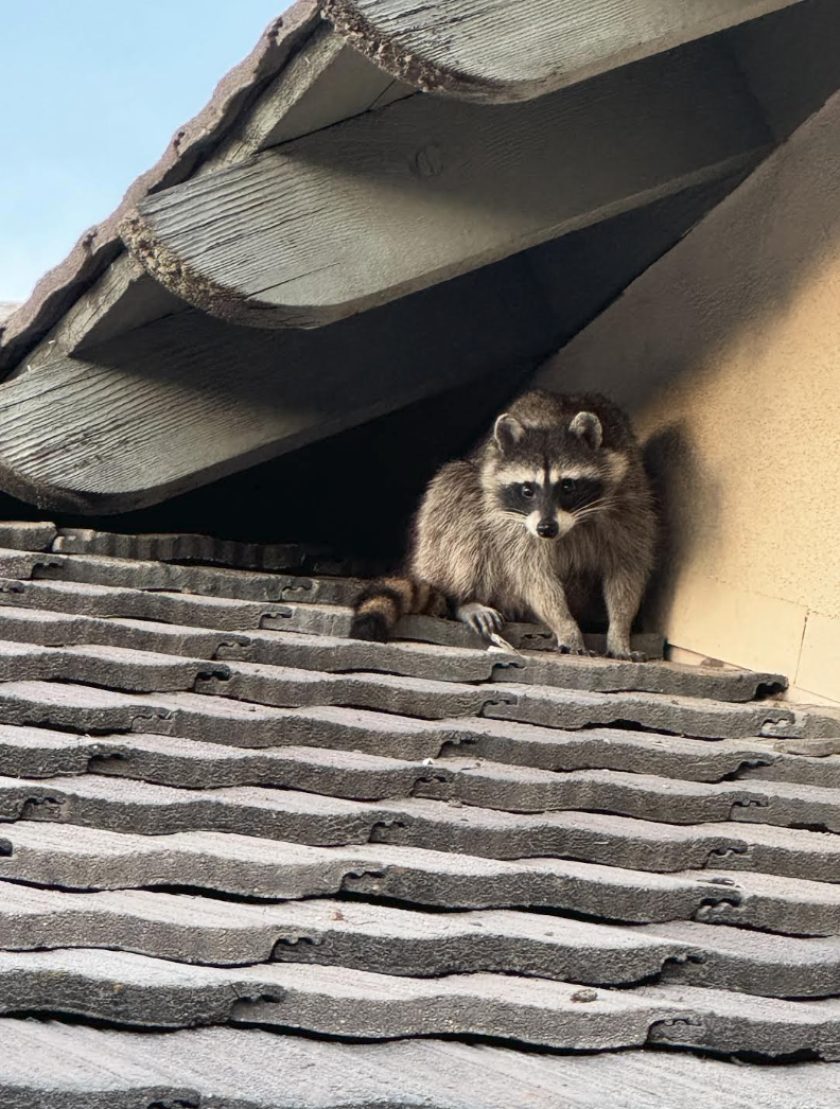
Raccoons are strong enough to tear through roof vents and smart enough to remember which trash can was easiest last time. When one decides your attic is a good denning spot, especially during spring birthing season, the damage adds up fast.
They’re also surprisingly difficult to discourage once they’ve settled in, since a raccoon that’s found a reliable food source or a warm, dry attic has little reason to leave on its own.
What a Raccoon in the Attic Sounds Like
Heavy thumping at night, torn insulation, and a strong odor near one section of the roofline are common signs. If it’s spring, there’s a good chance a mother raccoon has moved in with young, which changes how removal has to be handled.
Humane Removal and Lasting Exclusion
We remove raccoons humanely, reuniting mothers with young whenever a den is involved, then repair the entry point with materials strong enough to resist another break-in. Damaged insulation and ductwork are cleaned or replaced as part of the job.
Why Spring Calls Are Different
Raccoon activity in attics climbs noticeably in spring, when females look for a safe, warm place to raise young. If we find a den during this period, removal takes a bit more patience, since young raccoons aren’t mobile enough to be relocated right away, so we wait until they can safely leave with their mother rather than forcing an early separation.
Outside of denning season, removal is typically quicker, often wrapped up along with exclusion work in a single visit. Either way, we walk you through what we’re seeing in the attic before any work starts, so you understand why the timeline looks the way it does rather than just being told to wait.
We handle raccoon removal throughout Arizona, California, Colorado, and New Mexico. For post-removal cleanup, see our Remediation & Clean Up Services and Wildlife Exclusion.