- SPECIAL DISCOUNT
- 10% OFF on Full Home Recommendations + Free Consultation
- Excludes insulation services
- Contact Us
- Must mention at the time of booking

How To Repair Damaged Insulation After Wildlife Infestations
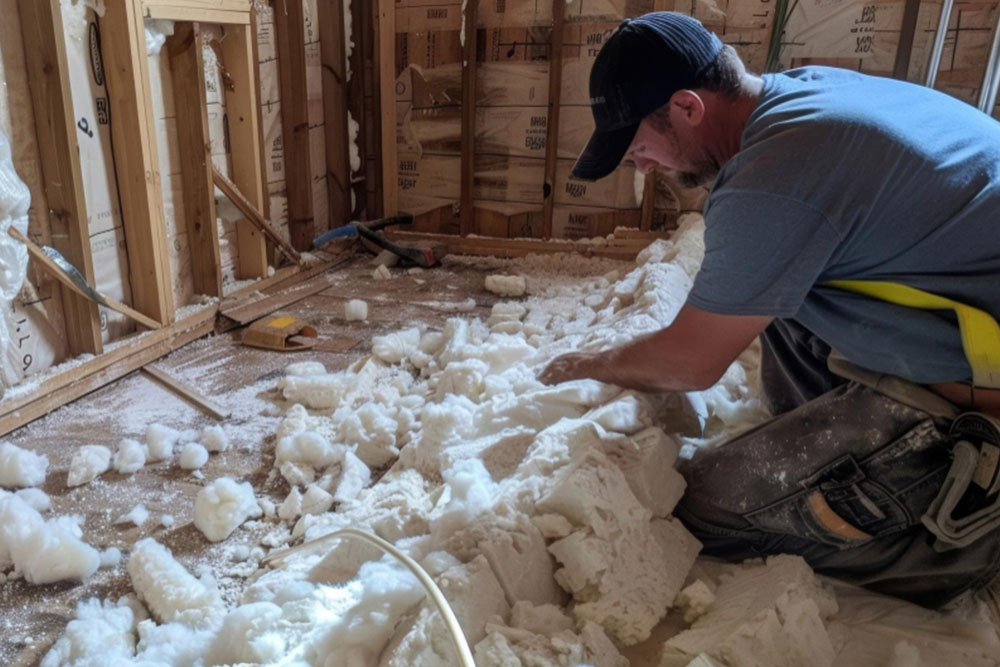
Wildlife activity in your attic or crawlspace doesn’t stop at noise or entry damage. One of the biggest impacts happens in the insulation, where animals nest, move, and leave behind contamination. That’s why insulation repair becomes an important part of restoring your home after an infestation.
It’s not just about swapping out old material. It’s about removing what’s been affected, cleaning the space, and rebuilding it so your home functions properly again. When done right, the process improves comfort, reduces odor, and helps prevent future problems.
Let’s walk through what actually happens to insulation during an infestation and how a full repair process brings everything back to normal.
What Wildlife Does to Insulation
Insulation might look untouched from a distance, but once animals get into it, the damage spreads quickly. Rodents, raccoons, squirrels, and other wildlife use insulation for nesting and movement.
They tear through it to create pathways. They compress it by repeatedly walking across the same areas. Over time, sections that were once evenly distributed become uneven and flattened.
The bigger issue is contamination. Droppings and urine soak into the material, spreading through layers that are not always visible. This changes not just how the insulation looks, but how it performs.
Once this happens, the insulation is no longer doing its job effectively.
Why Damaged Insulation Can’t Be Ignored
It’s easy to focus on removing the animal and overlook what’s left behind. But damaged insulation continues to affect your home long after the infestation ends.
Air quality can be impacted when contaminated particles move through the space. Odors can settle into the material and slowly spread into living areas. Temperature control also becomes less consistent when insulation is compressed or missing in sections.
Ignoring these issues allows them to linger. Over time, they can affect comfort, energy use, and the overall condition of your home.
Signs Your Insulation Needs Repair
You don’t always need to see the attic to know something isn’t right. There are signs that point to insulation damage even from inside your home.
You might notice uneven temperatures between rooms or a space that feels harder to heat or cool. There could be lingering odors that don’t seem to go away, especially in upper levels.
If you’ve had wildlife activity recently, that alone is a strong indicator that the insulation may have been affected. Even if the problem seemed small, the impact underneath can be more widespread.
Why Surface Cleaning Isn’t Enough
Some homeowners consider cleaning insulation instead of replacing it. While it might seem like a simpler option, it does not solve the full problem.
Insulation is porous. Once contamination gets inside, it spreads through layers that can’t be reached with surface cleaning. Even if the top looks better, the deeper layers may still hold odor and bacteria.
Cleaning also doesn’t address physical damage. Flattened or torn insulation doesn’t regain its original structure. That means it still won’t perform the way it should.
In most cases, proper repair involves removal and replacement rather than cleaning alone.
What a Professional Insulation Repair Process Looks Like
Repairing insulation after wildlife activity follows a structured process. Each step builds on the last to restore the space completely.
- Inspection and Assessment
The process starts with a wildlife control professional identifying how much of the insulation has been affected. This includes locating contaminated areas, damaged sections, and entry points used by wildlife.
- Removal of Damaged Insulation
Affected insulation is carefully removed to prevent particles from spreading into the home. This step clears out contamination and prepares the space for cleaning.
- Cleaning and Sanitization
Once the material is removed, the attic or crawlspace is treated to address residue and odor. This helps restore a cleaner environment before new insulation is installed.
- Sealing Entry Points
Before adding new insulation, access points are sealed. This step prevents wildlife from returning and affecting the new material.
- Installation of New Insulation
Fresh insulation is installed to create an even, consistent layer. This restores temperature control and improves overall comfort in the home.
How Repair Improves Comfort and Efficiency
When insulation is damaged, the effects often show up in how your home feels. Some rooms may feel drafty, while others hold heat unevenly.
After repair, the difference can be noticeable. Air moves more evenly, and the home becomes easier to maintain at a comfortable temperature. Systems don’t have to work as hard to keep up with changes.
This improvement comes from restoring the insulation to a consistent condition, allowing it to do its job again.
The Role of Cleanup in the Process
Wildlife infestation cleanup and remediation is not just about appearance. It plays a major part in restoring the environment inside your home.
Removing contaminated materials helps reduce odors and improves air quality. Treating the space afterward addresses residue that might otherwise linger.
This step is often what makes the space feel fully restored rather than partially fixed.
Preventing Future Insulation Damage
Repairing insulation also creates an opportunity to protect your home moving forward. By sealing entry points and addressing vulnerabilities, you reduce the chances of another infestation.
Wildlife tends to return to areas that have worked before. Closing off those access points removes that option and helps keep your attic or crawlspace secure.
This turns repair into a long-term solution instead of a temporary fix.
Restore Your Insulation the Right Way
Wildlife doesn’t just leave your attic messy. It leaves behind contamination, damaged insulation, and entry points that can lead to repeat problems. At Best Pest & Wildlife Control, we handle the full restoration process so your home is brought back to a clean and functional state.
We start with a detailed inspection to locate affected areas and entry points. From there, we remove contaminated insulation, clean and disinfect the space, and eliminate odors and residue. We also repair damage and seal openings so wildlife can’t get back in, then install new insulation to restore comfort and efficiency.
We proudly serve homeowners across Colorado, Arizona, California, and New Mexico. Schedule your free consultation today and fix the problem at its source.
CONTACT US FOR A FREE QUOTE
Feel free to give us a call or send us an email with any questions or comments you have.