- SPECIAL DISCOUNT
- 10% OFF on Full Home Recommendations + Free Consultation
- Excludes insulation services
- Contact Us
- Must mention at the time of booking

How Professionals Keep Raccoons Away From Your House After Removal
Quick Summary
Removing a raccoon from an attic or crawl space only solves half the problem, since the same entry point that let one raccoon in will keep drawing in new ones unless it gets sealed properly. Professionals treat exclusion, structural repair, and habitat changes as part of the same job as removal itself, not a separate service to consider later. This page walks through the specific steps used to keep raccoons from coming back once removal is complete.
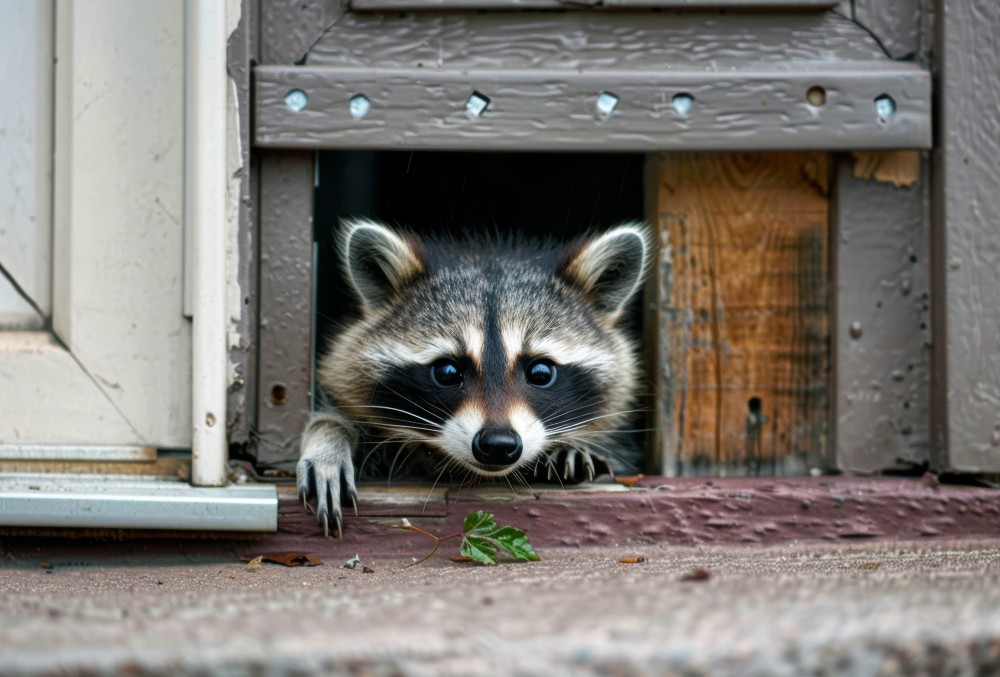
A raccoon that gets trapped and relocated leaves behind more than an empty nest. It leaves behind whatever gap, vent, or damaged screen let it in the first place, and that same opening looks just as inviting to the next raccoon that wanders through the yard looking for shelter. Property owners who only handle the removal side of the problem often find themselves dealing with a repeat visitor within weeks, sometimes even days, since raccoons are creatures of habit that remember a reliable den site.
Learning how to keep raccoons away from your house for good means addressing the entry points and attractants that brought the first one in, not just the animal itself. Professional raccoon removal accounts for this from the start, treating exclusion as part of the job rather than an afterthought. We walk through exactly what that process looks like below.
Sealing Chimneys and Roof Vents
Chimneys and roof vents rank among the most common entry points for raccoons, since both offer a direct path into an attic with minimal effort. A capped chimney with a secure mesh screen keeps raccoons from climbing in and nesting near the flue, while roof vents need to be upgraded from lightweight plastic covers to heavier, raccoon-resistant versions made from metal or reinforced mesh. Standard vent covers are not built to withstand a raccoon’s strength and can be pried open or torn loose within a single night. Once a raccoon has already used one of these openings, the surrounding material is often damaged enough that a simple patch will not hold, which is why a full replacement tends to work better than a quick fix.
Closing Gaps at the Roofline
The area where the roof meets the fascia, and the intersection between the roof and soffit, are both common weak points that raccoons exploit. Small gaps in these areas can widen over time from weather damage or from raccoons themselves working at loose material, so exclusion services typically involve reinforcing this whole section with durable flashing and mesh rather than patching a single hole.
A raccoon that has already gained access once knows exactly where that weak spot is, so a repeat visit often targets the same location within days. Left unaddressed, this area tends to invite ongoing activity even after the original raccoon has already been removed.
Repairing Siding and Foundation Gaps
Holes in siding, caused by weather, age, or a raccoon that has already been through the area once, create an easy opening for another animal to widen and use. Foundation gaps work the same way, especially around pipes or utility lines where the original seal has degraded over time. Repairing these openings with durable materials, rather than temporary fixes like foam or loose caulk, keeps raccoons and other wildlife from treating the exterior of a home as a series of unlocked doors.
A thorough inspection typically checks every side of the structure, since raccoons rarely limit themselves to just one weak point, and a gap that seems too small to matter is often exactly the size a determined raccoon needs.
Blocking Access Under Decks and Porches
Raccoons frequently den underneath decks, porches, and sheds where the space stays dry, dark, and hidden from view. Installing a barrier that extends below ground level around the perimeter of these structures stops raccoons from digging underneath and setting up a den close to the house.
This step matters most in situations where a raccoon has already been found nesting in one of these spaces, since the same location tends to attract another animal soon after the first one leaves. A buried barrier also discourages other burrowing wildlife like skunks and opossums, which is why wildlife control services often recommend this repair even when raccoons are the only animal causing problems right now.
Removing Food, Water, and Shelter Attractants
Raccoons are opportunistic feeders, and an unsecured trash can, an accessible pet food bowl left outside overnight, or a leaking outdoor faucet can be enough to keep them coming back to a property long after an initial removal. Securing trash containers with locking lids, feeding pets indoors, and fixing sources of standing water all reduce the reasons a raccoon has to return.
Wildlife and pest removal professionals often walk the entire property during an inspection specifically to flag these attractants before they turn into a repeat problem, since exclusion work alone rarely solves an issue tied to an easy food source. Even a well-sealed structure can see ongoing raccoon activity in the yard itself when these attractants go unaddressed, so the two efforts tend to work best together.
Trimming Trees and Managing Landscaping
Overhanging branches and dense shrubs near the roofline give raccoons an easy route onto a house that would otherwise be difficult to reach. Trimming tree limbs back several feet from the roof and keeping landscaping away from exterior walls removes that access point entirely. Woodpiles and dense brush stacked against the house create similar problems by offering both cover and a launching point toward the roof.
Combined with structural repairs and attic and crawlspace cleanup after an active raccoon has been removed, this kind of landscaping maintenance rounds out a complete exclusion plan that addresses the property from the ground up rather than focusing on the structure alone.
Let Best Pest & Wildlife Control Finish the Job Right
Removing a raccoon is only the first step, and we treat the exclusion work that comes after with the same level of care. At Best Pest & Wildlife Control, we inspect the full property for every gap, damaged vent, and weak point a raccoon or a future one could use, then seal it with materials built to hold up against determined wildlife.
Our technicians bring over 15 years of experience to every job across Arizona, California, Colorado, and New Mexico, backed by full state licensing and a fully insured team. Reach out today to schedule a free inspection and get a complete plan for keeping raccoons out for good.
Contact us today or call (866) 692-1793 to get started.
FAQs
How long does raccoon exclusion work take after removal?
Most exclusion work can be completed within a day or two once the raccoon has been safely removed and every entry point has been identified during the inspection. Larger repairs, like reinforcing an entire roofline or replacing several damaged vents, may take a bit longer depending on how extensive the damage turns out to be.
Will sealing entry points trap a raccoon inside my attic?
No. Professionals confirm the attic or crawl space is completely empty, often using one-way doors during the removal process, before any permanent sealing takes place. This step prevents a raccoon, or any babies left behind, from becoming trapped inside a structure once the work is finished.
Can raccoons chew through repaired entry points?
Materials used for professional exclusion work, like heavy-gauge mesh and reinforced vent covers, are chosen specifically because a raccoon cannot chew or pry through them the way it can with lightweight covers or unsealed gaps. This is part of why proper materials matter more than a quick patch.
CONTACT US FOR A FREE QUOTE
Feel free to give us a call or send us an email with any questions or comments you have.