- SPECIAL DISCOUNT
- 10% OFF on Full Home Recommendations + Free Consultation
- Excludes insulation services
- Contact Us
- Must mention at the time of booking

7 Types Of New Mexico Snakes (And When To Call Snake Removal Services)
Quick Summary
New Mexico is home to dozens of snake species, from harmless garter snakes near creek beds to four types of venomous rattlesnakes found across the state. This page breaks down seven snakes property owners in New Mexico are most likely to run into, how to tell them apart, and the situations where a professional removal call makes more sense than handling it alone.
Spotting a snake in the yard or garage is enough to make anyone’s heart skip a beat, and New Mexico’s mix of desert, grassland, and mountain terrain supports one of the most diverse snake populations in the country. Out of the many New Mexico snakes documented across the state, only a handful pose any real danger, but knowing which is which matters when one shows up near the house.
Warm rock piles, woodpiles, and cluttered sheds are common places for snakes to settle, especially when rodents are already nesting nearby, which is one more reason professional snake removal in New Mexico tends to solve more than one problem at once. We put this list together to help homeowners recognize what they are dealing with.
Western Diamondback Rattlesnake
The western diamondback is the most frequently spotted rattlesnake in New Mexico and one of the largest in the state, often stretching four to six feet long. Its gray-brown body and the black and white “coon-tail” bands near the tail make it fairly easy to identify. It turns up in flat plains and rocky canyons throughout the state, so rural and desert-adjacent properties see it often. A bite from this snake is a medical emergency, so distance matters more than a close look.
Prairie (Western) Rattlesnake
Found across nearly the entire state, the prairie rattlesnake favors grassland deserts and pine-oak forest alike. Its greenish-gray or pale brown coloring helps it blend into dry vegetation, and it becomes more active after dark. Homeowners are often more likely to hear it than see it, especially near woodpiles or rocky borders. In situations like this, professional wildlife control services can safely relocate the snake without unnecessary risk.
Black-Tailed Rattlesnake
This rattlesnake sticks mostly to rocky, mountainous terrain across southwestern and central New Mexico, though it occasionally wanders into lower desert areas. Its greenish or steel-gray body and dark tail set it apart from other local rattlesnakes. Though generally calm, it will rattle and raise its head quickly if cornered. Sightings near stone walls or rock gardens are common where this species is established.
Massasauga Rattlesnake
Smaller and less commonly seen than New Mexico’s other rattlesnakes, the massasauga favors sandy desert grassland in the southern, central, and eastern parts of the state. Its pale brown body with paired dark spots makes it easy to overlook in dry grass. A bite is rarely fatal but can be extremely painful. Sealing gaps around foundations and sheds through proper exclusion services helps keep snakes like this one from settling in close to the house.
Bullsnake (Gopher Snake)
Bullsnakes are among the most common snakes in New Mexico and can grow longer than most people expect, sometimes reaching six to eight feet. They are completely non-venomous, but their defense routine fools plenty of people. When threatened, a bullsnake flattens its head, hisses loudly, and shakes its tail against dry ground to mimic a rattlesnake’s warning, which is why sightings often get reported as rattlesnakes when they are not.
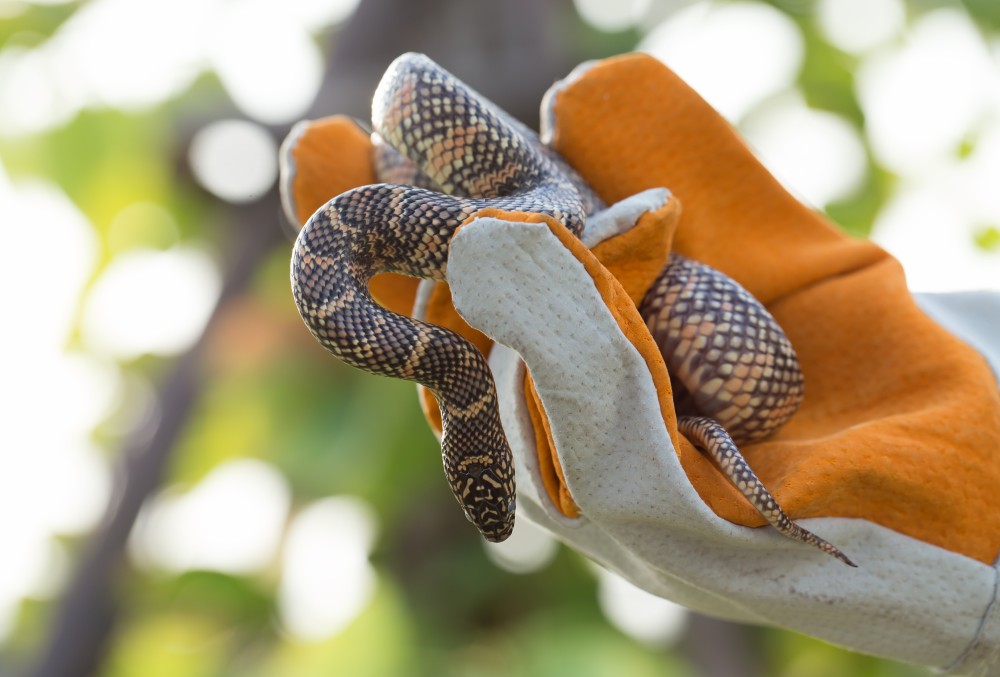
Common Kingsnake
Kingsnakes are non-venomous and actually prey on other snakes, including venomous ones, which makes them a genuinely helpful presence in the yard. New Mexico has several kingsnake varieties with banded patterns that can resemble more dangerous species at a glance. A quick call to a professional snake removal service clears up the confusion faster than guessing.
Garter Snake
Garter snakes turn up near water sources, damp landscaping, and gardens throughout New Mexico, ranking among the species most often found close to homes. They pose no real danger to people, though their saliva carries mild toxins that can irritate small prey. Their slender bodies and light-colored stripes make them one of the easier species to tell apart from the state’s rattlesnakes.
When to Call a New Mexico Snake Removal Service
Most snake encounters in New Mexico end the same way: the snake moves on and nobody gets hurt. Still, certain situations call for backup rather than a wait-and-see approach. A venomous species inside a garage, basement, or living space needs immediate professional attention, as does repeated activity near the same entry point, which usually points to a rodent problem drawing snakes in.
Snakes that follow rodents into attics or crawl spaces can leave behind more than a scare, and attic and crawlspace cleanup is often part of resolving the bigger picture once the snake has been safely removed.
Let Best Pest & Wildlife Control Handle Snake Concerns Near Your Home
Finding a snake near the house is unsettling, harmless or not, and misidentifying one is easier than most people think. At Best Pest & Wildlife Control, our technicians correctly identify the species on-site, then use humane trapping methods to remove it safely without unnecessary harm to you or the snake. Since snakes often follow rodents into attics, garages, and crawl spaces, we also inspect for the food source drawing them in and can seal off entry points so both the snake and its prey stay out for good.
We bring over 15 years of experience to every New Mexico property we serve, with free inspections and same-day or next-day service available across Albuquerque, Santa Fe, and the surrounding area.
Contact us today or call (866) 692-1793 to get started.
FAQs
Are all rattlesnakes in New Mexico dangerous?
All seven rattlesnake species found in New Mexico are venomous and should be treated with caution, though bites are rare and usually happen when a snake is startled or handled. Giving any rattlesnake plenty of space is the safest response in nearly every situation.
How can I tell a bullsnake from a rattlesnake?
Bullsnakes lack a true rattle, though they often shake their tail against dry ground to mimic one. Rattlesnakes have a wide, triangular head and a rattle made of interlocking segments, while bullsnakes have a narrower head and a pointed tail.
What attracts snakes to a property in New Mexico?
Snakes typically follow food sources, and rodent activity is one of the biggest draws. Cluttered woodpiles, tall grass, and gaps around foundations also give snakes places to hide and stay cool during the hottest parts of the day.
CONTACT US FOR A FREE QUOTE
Feel free to give us a call or send us an email with any questions or comments you have.